
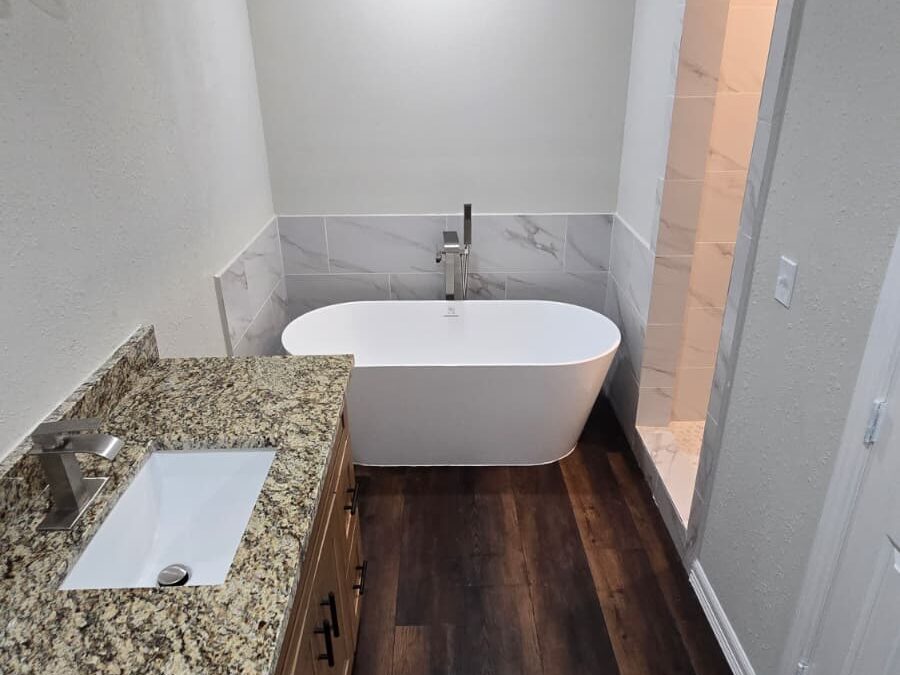
When planning a bathroom remodeling project, one of the most important decisions you’ll make is choosing between a walk-in shower and a bathtub. Both options offer unique benefits, and the right choice depends on your lifestyle, space, budget, and long-term goals.
At Home Masters, we’ve helped countless homeowners throughout Houston transform outdated bathrooms into functional, beautiful spaces. As a trusted home remodeler, we understand how personal and strategic this decision can be. In this guide, we’ll walk you through the advantages and considerations of walk-in showers and bathtubs so you can determine which option is best for your home.
Why This Decision Matters in a Bathroom Remodel
Bathroom remodeling is one of the most valuable home improvement projects you can undertake. Not only does it enhance daily comfort, but it can also significantly boost resale value. However, choosing between a walk-in shower and a bathtub affects:
- Functionality and accessibility
- Space utilization
- Aesthetic appeal
- Water usage
- Long-term property value
Making the right choice ensures your bathroom renovation aligns with your lifestyle and investment goals.
The Case for Walk-In Showers
Walk-in showers have surged in popularity over the past decade, especially in modern and contemporary home designs.
1. Sleek, Modern Aesthetic
Walk-in showers create a clean, open look. Frameless glass enclosures and seamless tile work can make even smaller bathrooms feel larger and more luxurious. For homeowners seeking a spa-like atmosphere, a walk-in shower delivers.
Design options include:
- Rainfall showerheads
- Body spray systems
- Built-in niches and benches
- Custom tile patterns
- Linear drains for a minimalist finish
In Houston homes where contemporary updates are in demand, walk-in showers are often a top choice during bathroom remodeling projects.
2. Improved Accessibility
For aging homeowners or families planning to age in place, walk-in showers offer superior accessibility. Curbless entries reduce tripping hazards, and features like grab bars and built-in seating enhance safety.
This makes walk-in showers ideal for:
- Seniors
- Individuals with mobility challenges
- Multigenerational households
Accessibility upgrades can also increase your home’s appeal to a broader range of future buyers.
3. Space Efficiency
If your bathroom is limited in square footage, replacing a bulky tub with a streamlined shower can free up valuable space. This can allow for:
- Larger vanities
- Additional storage
- Improved layout flow
In many Houston homes, especially older properties, optimizing bathroom layout is a key remodeling goal.
4. Easier Cleaning and Maintenance
Compared to traditional tubs, walk-in showers often require less scrubbing—especially when built with large-format tiles and minimal grout lines. Frameless glass can be treated to resist water spots, reducing maintenance time.
5. Water Efficiency
Showers generally use less water than filling a bathtub, particularly when equipped with low-flow fixtures. For eco-conscious homeowners, this can lower water bills and reduce environmental impact.
Potential Drawbacks of Walk-In Showers
While walk-in showers offer many benefits, they may not be ideal in every scenario.
1. Resale Considerations
If your home has only one full bathroom, removing the only bathtub could impact resale value. Many buyers—particularly families with young children—prefer at least one bathtub in the home.
2. Less Relaxation for Some
For those who enjoy soaking in a hot bath after a long day, a shower may not offer the same therapeutic experience.
The Case for Bathtubs
Bathtubs remain a classic feature in bathroom design, and they continue to hold strong appeal in many homes.
1. Family-Friendly Functionality
If you have young children, a bathtub can be essential. Bath time is simply more practical with a tub, making it a must-have for many families.
From a real estate perspective, homes without at least one bathtub can be less attractive to buyers with children.
2. Relaxation and Wellness
Freestanding soaking tubs have become a statement feature in luxury bathroom remodeling projects. They provide:
- Stress relief
- Muscle relaxation
- A spa-like retreat
For homeowners prioritizing comfort and self-care, a bathtub can serve as a centerpiece of the bathroom.
3. Increased Design Versatility
Today’s bathtubs come in various styles, including:
- Freestanding tubs
- Alcove tubs
- Drop-in tubs
- Whirlpool and jetted tubs
This versatility allows homeowners to tailor their remodel to traditional, transitional, or contemporary aesthetics.
4. Strong Resale Appeal
In many markets, including Houston, having at least one bathtub is considered standard. Even if you prefer a walk-in shower in your primary suite, maintaining a tub in a secondary bathroom can protect resale value.
Potential Drawbacks of Bathtubs
1. Space Requirements
Bathtubs require more floor space than most walk-in showers. In smaller bathrooms, this can limit layout flexibility.
2. Higher Water Usage
Filling a bathtub typically uses more water than a quick shower. For homeowners looking to reduce utility costs, this may be a consideration.
3. Accessibility Challenges
Traditional tubs require stepping over a high edge, which can be difficult for older adults or those with mobility concerns.
Key Factors to Consider Before Deciding
When helping homeowners choose between a walk-in shower and a bathtub, we evaluate several important factors.
1. Your Household Needs
- Do you have young children?
- Are you planning to age in place?
- Do you prefer quick showers or long baths?
Your daily habits should heavily influence your decision.
2. Bathroom Size and Layout
Not all bathrooms can comfortably accommodate both a spacious shower and a bathtub. A professional bathroom remodeling consultation helps determine the best layout for your space.
3. Budget
Walk-in showers with custom tile and frameless glass can be more expensive than standard tubs. However, luxury freestanding bathtubs can also significantly increase project costs.
The overall cost depends on:
- Plumbing modifications
- Tile selection
- Fixture upgrades
- Structural changes
4. Long-Term Property Value
If you plan to sell within the next few years, consider market expectations. In many Houston neighborhoods, buyers expect at least one bathtub in the home.
The Best of Both Worlds: Shower-Tub Combos
If you’re torn between the two, a shower-tub combination may be the perfect solution. Modern designs have come a long way from basic setups. With elegant tile surrounds and sleek glass panels, shower-tub combos can feel upscale while offering flexibility.
This option works especially well in:
- Guest bathrooms
- Secondary bathrooms
- Homes with limited square footage
What We Recommend
As experienced bathroom remodeling professionals, our recommendations often depend on the specific home and homeowner.
Here’s a general guideline:
- Primary bathroom in a forever home: Walk-in shower for accessibility and luxury.
- Family home with children: Keep at least one bathtub.
- Small guest bathroom: Shower-tub combo for versatility.
- Luxury remodel: Consider both a walk-in shower and a freestanding soaking tub if space allows.
Every home is unique. That’s why personalized design planning is essential to achieving the right balance between comfort, style, and resale value.
Final Thoughts: Walk-In Shower or Bathtub?
There’s no one-size-fits-all answer. The right choice depends on your lifestyle, family needs, and plans.
Walk-in showers offer modern aesthetics, accessibility, and space efficiency. Bathtubs provide relaxation, family functionality, and strong resale appeal. In many cases, the ideal solution may involve incorporating both.
If you’re planning a bathroom remodeling project in Houston, working with an experienced home remodel contractor ensures you make a decision that enhances both daily living and long-term value.